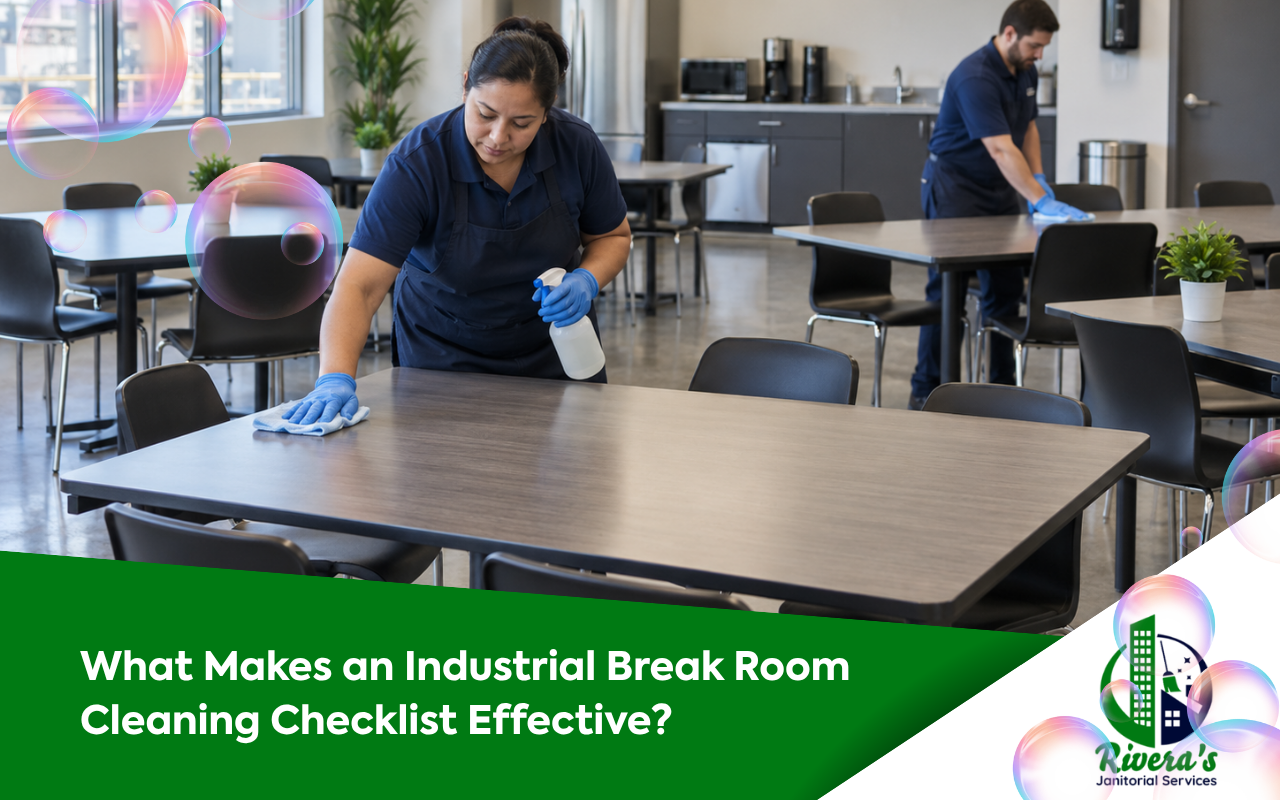
An industrial break room cleaning checklist is effective when it covers daily surfaces, appliances, waste, floors, food storage, and deeper cleaning. It should also assign tasks clearly and support consistent employee break area hygiene.
With Rivera’s Janitorial Services, we focus on practical routines that help shared spaces stay cleaner throughout busy workdays. For broader workplace safety guidance, review our industrial janitorial safety checklist.
Break room cleaning is useful for factories, warehouses, and other industrial workplaces where many employees share one room. The goal is to reduce visible mess, control odors, and prevent neglected areas from building up.
Prioritize Daily Surfaces for Better Shared Hygiene
Daily surface care keeps the most-used areas ready for each shift. Tables, counters, chair backs, benches, refrigerator handles, microwave buttons, faucets, and cabinet pulls can collect food residue and frequent hand contact.
We recommend building these tasks into the same routine used for other warehouse cleaning best practices. Surfaces should be cleaned before sanitizing or disinfecting when those added steps are needed.
Daily Surface Cleaning Tasks
- Wipe tables, counters, chairs, and benches.
- Clean handles, switches, buttons, and faucet controls.
- Remove crumbs, grease, sticky spots, and visible spills.
- Use products that are suitable for each surface.
- Check shared touchpoints between busy shifts when needed.
Use a Break Room Cleaning Checklist by Frequency
A frequency-based checklist helps facility managers separate daily cleaning from weekly and periodic work. This keeps the routine realistic without treating every task as daily.
Industrial Break Room Cleaning Schedule
| Frequency | Cleaning Focus | Areas Included | Why It Matters |
|---|---|---|---|
| Daily | Visible mess and high-use surfaces | Tables, counters, sinks, touchpoints, floors, waste bins | Supports cleaner employee break area hygiene |
| Weekly | Appliance and storage detail | Microwaves, refrigerator shelves, cabinet fronts, coffee areas | Reduces hidden food residue and odors |
| Periodic | Deeper buildup prevention | Walls, corners, floor edges, spaces behind movable items | Prevents neglected areas from becoming harder to clean |
| As needed | Spills, leaks, odors, or overflow | Food areas, waste stations, floors, appliance interiors | Responds quickly before problems spread |
Key Takeaway
The best checklist assigns tasks by frequency, use level, and break room conditions instead of relying on one general cleaning list.
Control Food Areas to Reduce Odors and Mess
Food areas need regular attention because spills and forgotten items can create odors quickly. Refrigerators, microwaves, coffee stations, and nearby counters should stay part of the normal checklist.
Refrigerator care should include shelves, drawers, handles, interior walls, and visible leaks. Microwaves need exterior wiping and removal of food splashes inside.
Food Area Cleaning Tasks
- Check refrigerators for spills and abandoned food.
- Wipe microwave interiors, handles, and controls.
- Clean coffee stations and water dispensers.
- Inspect counters, sinks, and nearby storage areas.
- Report recurring odors, leaks, or pest concerns.
Manage Floors and Waste for Safer Movement
Floors and waste areas affect both cleanliness and safe movement through the room. Crumbs, tracked-in debris, liquids, and overflowing bins can create unpleasant conditions.
We include sweeping, vacuuming, mopping, bin emptying, and liner replacement among practical manufacturing facility cleaning tasks. Our team also checks corners, spaces beneath tables, and areas around vending machines.
For nearby industrial zones, the loading dock cleaning checklist offers another useful planning reference.
Key Takeaway
Break room floor and waste care should support both hygiene and safe movement through shared employee areas.
Schedule Deeper Cleaning to Prevent Hidden Buildup
Deeper cleaning prevents neglected areas from becoming ongoing odor or sanitation problems. Daily care handles visible mess, while scheduled cleaning reaches appliance edges, cabinet fronts, walls, hidden floor areas, and storage zones.
When businesses need industrial cleaning services in Simi Valley, Rivera’s Janitorial Services can help facility managers review broader cleaning needs and build a practical routine.
Follow a Clear Process for Consistent Break Room Care
A consistent process helps employees and cleaning teams understand what happens before, during, and after each scheduled cleaning. We start by reviewing the room, its traffic, and visible problem areas.
Then we organize tasks by frequency and explain which areas need routine cleaning, deeper attention, or restocking.
Break Room Cleaning Process
- Review the break room and note high-use areas.
- Identify daily, weekly, and deeper-cleaning tasks.
- Clean food, sink, touchpoint, waste, and floor zones.
- Check supplies and note areas needing follow-up.
- Adjust the routine when traffic or conditions change.
For broader site planning, our industrial janitorial safety checklist can connect break room care with other workplace cleaning priorities.
Frequently Asked Questions
What should be cleaned daily in industrial break rooms?
Daily cleaning should focus on tables, counters, seating, high-touch controls, sinks, visible spills, waste bins, and floors.
When should a break room refrigerator receive deeper cleaning?
A refrigerator should receive deeper cleaning on a regular schedule and whenever spills, leaks, odors, or abandoned food appear.
Why are high-touch surfaces important in shared break areas?
High-touch surfaces are handled by many employees during the day. Regular cleaning removes dirt and residue from handles, switches, buttons, faucets, and shared controls.
Can employees help maintain cleaner break room spaces?
Yes. Employees can wipe major spills, label food, dispose of waste correctly, and report supply shortages or problem areas.
Should break room cleaning connect with other facility tasks?
Yes. Break room care works best when it fits within broader manufacturing facility cleaning tasks, warehouse cleaning, and nearby high-traffic industrial areas.
Choose a Practical Routine That Keeps Break Rooms Ready
A practical checklist makes shared-space care easier to repeat and easier to review. With Rivera’s Janitorial Services, you can discuss break room needs alongside other industrial cleaning priorities without adding unsupported steps.
If your facility needs a clearer routine, contact us to review the next steps for industrial cleaning services in Simi Valley.