Loading areas can become messy before a team notices the risk. Dirt, cardboard, oil marks, and water near dock doors can slow movement and create unsafe paths. A clear Warehouse cleaning best practices plan helps your facility keep dock work cleaner, safer, and easier to manage.
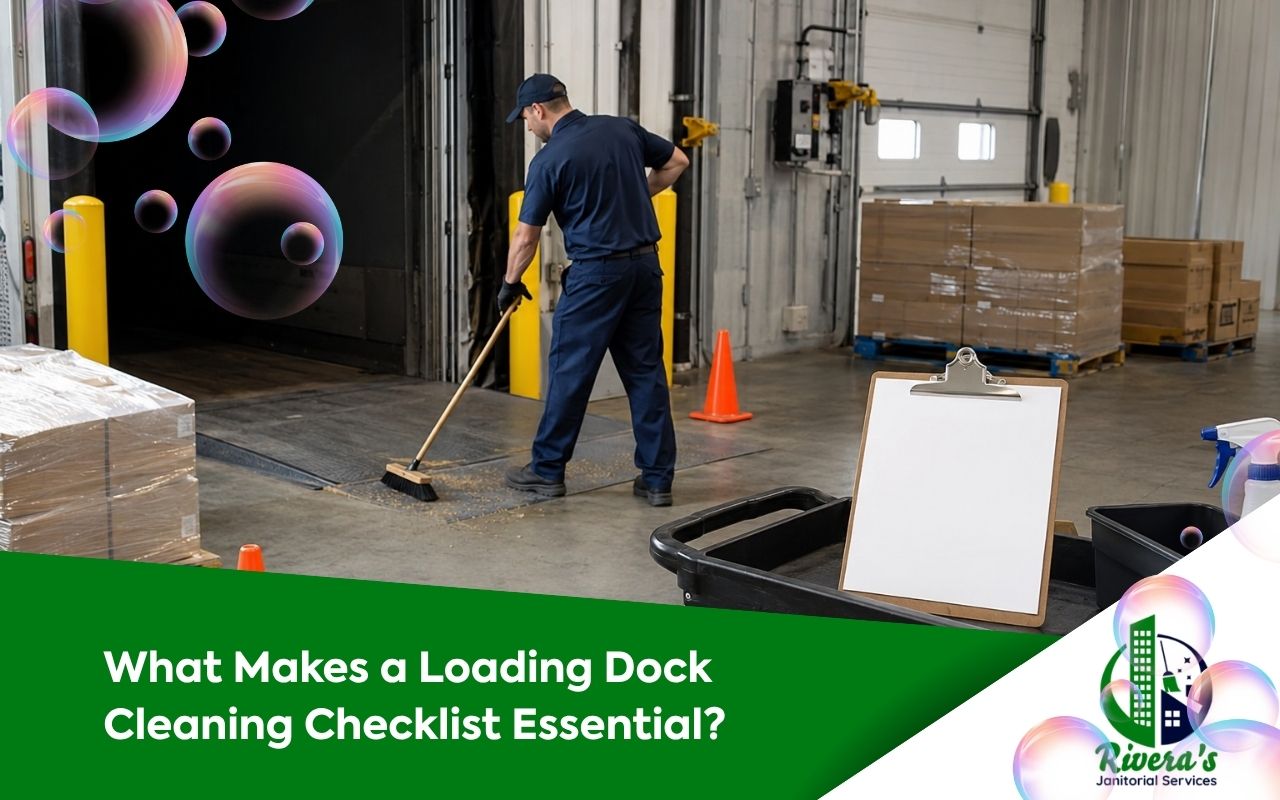
What Makes a Loading Dock Cleaning Checklist Essential?
A loading dock cleaning checklist is essential because it keeps high-traffic dock areas clear, organized, and safer for workers, drivers, forklifts, and pallet jacks. It also helps teams manage spills, debris, exterior dirt, and routine inspections before small problems interrupt daily work.
For many facilities, dock cleaning is the routine care used to remove debris, wash traffic areas, check problem spots, and keep loading zones ready for shipments. It is useful for warehouses, industrial sites, and commercial buildings that need clear paths, cleaner surfaces, and safer movement near trucks and equipment.
Reduce Dock Hazards With Clear Daily Cleaning Tasks
Daily dock cleaning reduces hazards by keeping walkways, dock plates, levelers, and door areas free from loose debris. A simple daily routine helps workers see spills faster, move equipment with fewer delays, and report concerns before loading activity increases.
At Rivera’s Janitorial Services, we understand that dock areas need more than a quick sweep. Dust, broken pallets, cardboard, and moisture can collect near corners and doors. A daily routine should connect with a larger Warehouse cleaning best practices plan so the dock does not become a separate problem area.
- Sweep trash, dust, and cardboard from traffic lanes.
- Remove debris near dock plates, levelers, and doors.
- Wipe fresh spills before surfaces become slippery.
- Check for oil marks, water pooling, or blocked paths.
- Report damaged seals, bumpers, or unsafe areas.
Control Debris Faster Through Weekly Surface Care Routines
Weekly surface care controls buildup that daily cleaning may miss. Dock edges, drains, wall bases, door tracks, and exterior-facing areas need regular attention because grime can settle there and spread into the warehouse during busy shipment periods.
With Rivera’s Janitorial Services, you can shape weekly cleaning around the traffic level and layout of your site. Weekly work should support debris control, but it should also give your team time to inspect areas that are easy to overlook.
- Wash dock floors, edges, and low areas.
- Clear drains, gutters, and water collection points.
- Clean door tracks, wall bases, and corners.
- Wipe high-contact surfaces near dock controls.
- Review hazards with an Industrial janitorial safety checklist.
Because dock areas involve foot traffic, equipment movement, exterior debris, and active loading zones, clean walking-working surfaces matter in any routine that supports safer daily operations.
Protect Exterior Dock Areas With Monthly Deep Cleaning
Monthly deep cleaning protects exterior-facing dock areas by removing stains, packed dirt, and grime that routine cleaning may not fully address. This step is important for docks exposed to weather, truck traffic, and frequent material handling.
Industrial exterior cleaning should cover more than the floor. Door frames, nearby walkways, dock pits, bumpers, and wall edges may collect dirt from outside traffic. Our team at Rivera’s Janitorial Services checks these areas so cleaning work supports both appearance and daily use.
- Move loose items before cleaning floor edges.
- Scrub seams, corners, pits, and stained surfaces.
- Clean exterior doors, frames, and nearby walkways.
- Look for cracks, corrosion, or worn seals.
- Record issues for repair review or extra care.
A loading dock cleaning checklist works best when monthly tasks are simple to repeat. Hidden grime becomes easier to manage when the same areas are reviewed on a steady schedule.
Strengthen Safety Habits Around Forklifts And Pedestrians
Safe dock cleaning depends on clear habits around forklifts, drivers, pedestrians, and wet surfaces. Workers should know when to mark a wet floor, where to place supplies, and how to avoid cleaning too close to moving equipment.
The National Institute for Occupational Safety and Health has warned about serious forklift risks for people who operate or work near them. A clean dock does not replace training, but it supports safer movement by keeping hazards visible and paths open.
The Canadian Centre for Occupational Health and Safety also explains that forklifts are often used to load and unload trailers, railcars, cargo vans, and pickup trucks. This makes clear traffic areas and visible hazards important around active dock zones.
Facilities comparing industrial cleaning services in Simi Valley should ask how cleaning routines support practical safety steps. With Rivera’s Janitorial Services, we can help organize cleaning around shipment flow, traffic areas, and facility needs without making unsupported promises about timing or pricing.
- Mark wet areas before workers or equipment pass through.
- Keep cleaning supplies away from active travel paths.
- Use approved cleaners for grease and outdoor buildup.
- Report blocked exits, damaged dock parts, or spills.
Plan Cleaning Support Around Your Dock Workflow
A useful cleaning process starts with understanding your dock layout, traffic flow, and main problem areas. When cleaning is planned around real work patterns, the routine becomes easier to follow and less likely to interrupt shipments.
When customers contact Rivera’s Janitorial Services, we ask about the dock area, daily activity, exterior exposure, and cleaning concerns. Then we review practical next steps, including how dock work can connect with Janitorial services in Simi Valley CA.
- First, we listen to your cleaning concerns.
- Next, we review the dock and nearby areas.
- Then, we explain routine cleaning options.
- After that, we help plan useful task frequency.
- Finally, we keep the process clear for your team.
A loading dock cleaning checklist should be easy for workers to understand. The best next step is to choose tasks that match your facility instead of adding steps no one can follow.
Frequently Asked Questions
How often should a loading dock be cleaned?
Most loading docks need daily debris removal, weekly surface care, and monthly deep cleaning. The right schedule depends on shipment volume, weather exposure, floor condition, and traffic from forklifts, pallet jacks, workers, and drivers.
What tasks belong in a dock cleaning checklist?
A dock checklist should include sweeping, spill cleanup, drain checks, door track cleaning, surface washing, and basic hazard reporting. It can also connect with Industrial janitorial safety checklist steps for safer routines.
Why does debris control matter near dock doors?
Debris control matters because loose cardboard, dirt, broken pallet pieces, and trash can block paths or hide spills. Clear dock doors help workers move safer and keep equipment areas easier to inspect during busy loading times.
Can dock cleaning support a full warehouse plan?
Yes. Dock cleaning works best when it fits into the full warehouse cleaning plan. For a wider facility approach, review Warehouse cleaning best practices and connect dock care with interior cleaning needs.
Should professional cleaners handle exterior dock buildup?
Professional cleaning support can help when exterior dirt, grease, stains, or hard-to-reach areas become difficult for staff to manage. To discuss your dock, use the Contact Rivera’s Janitorial Services page and share your facility concerns.
Keep Your Loading Dock Ready For Safer Work
A practical loading dock cleaning checklist helps your team reduce clutter, protect workflow, and notice issues before they grow. With Rivera’s Janitorial Services, you can plan cleaning support that fits your dock, warehouse, or industrial area. For help with the next step, Contact Rivera’s Janitorial Services for loading dock cleaning support.