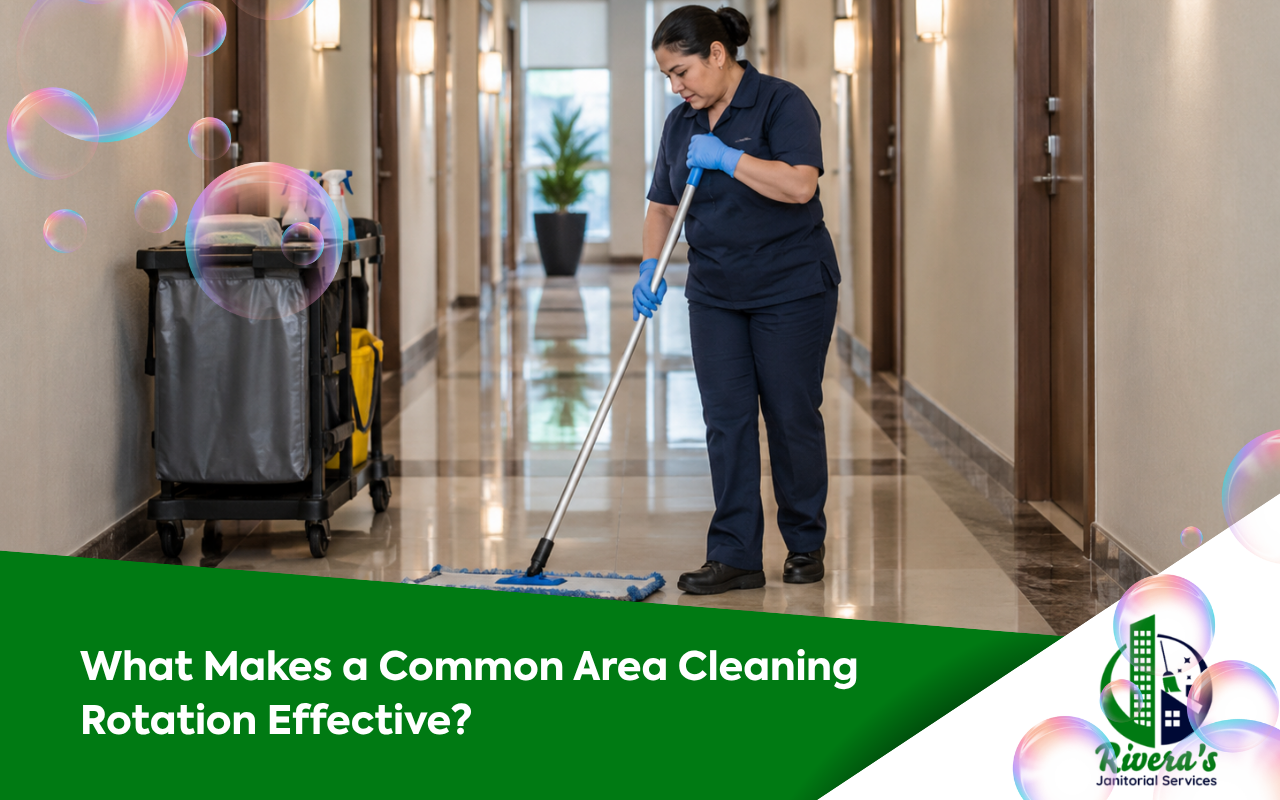
A common area cleaning rotation works when shared spaces are cleaned based on traffic, use, and need. It helps property managers keep entrances, hallways, stairs, elevators, and touchpoints cleaner while reducing missed tasks and repeated work.
For many buildings, this type of cleaning plan organizes shared spaces into daily, weekly, and periodic tasks. It is useful for property managers, office buildings, apartments, and multi-tenant spaces that need cleaner common areas, clearer expectations, and a steadier routine for tenants and visitors.
For larger properties, our multi-use commercial building cleaning support can keep shared spaces easier to manage.
Prioritize High-Traffic Shared Spaces First
Shared spaces with the most daily use should receive the most frequent cleaning. Entrances, lobbies, elevators, stairways, mail areas, and hallways often collect dirt first, so they need regular checks before debris moves deeper into the building.
At Rivera’s Janitorial Services, we look at how people move through the property before setting routine priorities. Floors near doors may need more attention after wind or rain, while elevator buttons, railings, handles, and restroom touchpoints need planned care because they are touched often.
High-Traffic Areas to Review
- Entrances that collect outdoor dirt first
- Elevators with frequent touchpoint use
- Hallways with dust along edges
- Stair rails and shared handrails
- Mail areas that collect small debris
Organize a Shared Building Cleaning Schedule
A shared building cleaning schedule works best when tasks are grouped by daily, weekly, and periodic needs. This keeps routine work simple, prevents missed areas, and helps property teams understand what should happen during each cleaning cycle.
Common Area Cleaning Rotation Guide
| Frequency | Common Area Tasks | Best Areas | Why It Matters |
|---|---|---|---|
| Daily | Touchpoints, visible debris, trash checks, spot cleaning | Entrances, elevators, lobbies, restrooms | Controls buildup in the busiest spaces |
| Weekly | Deeper floor care, glass, ledges, detailed dusting | Hallways, stairways, mail areas, shared corridors | Prevents dirt from collecting in less visible areas |
| Monthly | Baseboards, corners, vents, fixtures, storage checks | Lower-traffic common areas and edges | Reduces overlooked buildup over time |
| Seasonal | Weather-related entrance care, mat review, schedule adjustment | Doors, exterior approaches, shared walkways | Adapts cleaning to rain, dust, wind, and traffic changes |
Our team at Rivera’s Janitorial Services can align cleaning tasks with a written commercial cleaning scope of work. That makes expectations easier to review and adjust when traffic, tenants, or building use changes.
Key Takeaway
A cleaning rotation should match real building use instead of relying on one fixed checklist for every shared space.
Clarify Tenant Common Area Cleaning Expectations
Tenant common area cleaning expectations should be clear before small issues become complaints. Most shared spaces are maintained by management or a cleaning team, but tenants still help by reporting spills, using trash containers, and respecting shared areas.
Clear communication reduces confusion. Tenants may need to know when hallway cleaning, stair cleaning, restroom cleaning, or lobby cleaning usually happens. They may also need a simple way to report spills, odors, overflowing bins, or unsafe wet spots.
Helpful Tenant Communication Steps
- Post simple cleaning reminders when helpful.
- Give tenants a way to report urgent messes.
- Keep responsibility clear for shared spaces.
- Review repeated issues with the cleaning team.
For property managers comparing options, janitorial services in Thousand Oaks can support cleaner tenant areas without placing the burden on residents or office occupants.
Adjust Building Cleaning Services Seasonally
Building cleaning services in Thousand Oaks should adjust when weather and property use change. Rain, wind, dry dust, landscaping debris, and heavier visitor traffic can all affect how often entrances, floors, glass, and stairways need care.
A dry week may leave dust along hallway edges and window areas. A rainy period may track moisture near entrances and mats. Seasonal events or tenant move-ins can also increase trash, fingerprints, and floor marks in shared zones.
With Rivera’s Janitorial Services, we review visible patterns instead of keeping outdated routines. If one entrance becomes dirty faster than others, that area may need more frequent attention. If a corridor stays clean longer, the schedule can be balanced elsewhere.
Key Takeaway
Seasonal changes should influence cleaning frequency, especially near entrances, floors, mats, glass, and shared walkways.
Prepare Cleaning Rotations Through a Simple Process
A clear process helps property managers understand what happens before cleaning begins. The first step is sharing the property type, common areas, current concerns, access needs, and any spaces that need special attention.
After a request comes in, our team reviews the building layout and asks about entrances, hallways, stairs, elevators, restrooms, trash areas, and cleaning frequency.
Cleaning Rotation Setup Steps
- Share the property details and common areas.
- Review high-traffic spaces and problem spots.
- Choose daily, weekly, or periodic task needs.
- Confirm access, timing, and cleaning priorities.
- Review results and adjust the rotation when needed.
Property managers can also read customer reviews to understand how other clients describe their experience before starting a new routine.
Frequently Asked Questions
How often should shared building areas be cleaned?
Cleaning frequency depends on traffic, tenant use, weather, and building layout. Entrances, elevators, touchpoints, and shared restrooms often need more frequent care.
What areas belong in a common cleaning rotation?
Most rotations include entrances, lobbies, hallways, stairs, elevators, mail areas, restrooms, touchpoints, glass, floors, and shared trash areas.
Can tenants handle common area cleaning themselves?
Tenants can help by avoiding mess, using trash containers, and reporting spills quickly. Still, most common areas need a planned cleaning routine from management or a cleaning provider.
Do professional cleaners adjust routines for building traffic?
Yes. Routines can change when some spaces collect dirt faster than others or when seasonal conditions affect entrances and shared walkways.
When should property managers update the cleaning schedule?
Update the schedule when tenants change, traffic increases, weather affects entrances, or repeated cleaning issues appear.
Strengthen Shared Property Care With a Better Routine
A common area cleaning rotation helps shared buildings stay cleaner, safer, and easier to manage when the plan matches real use. At Rivera’s Janitorial Services, we help property managers create practical routines for entrances, hallways, stairs, elevators, and tenant spaces.
To plan your next routine for building cleaning services in Thousand Oaks, contact our team today.