

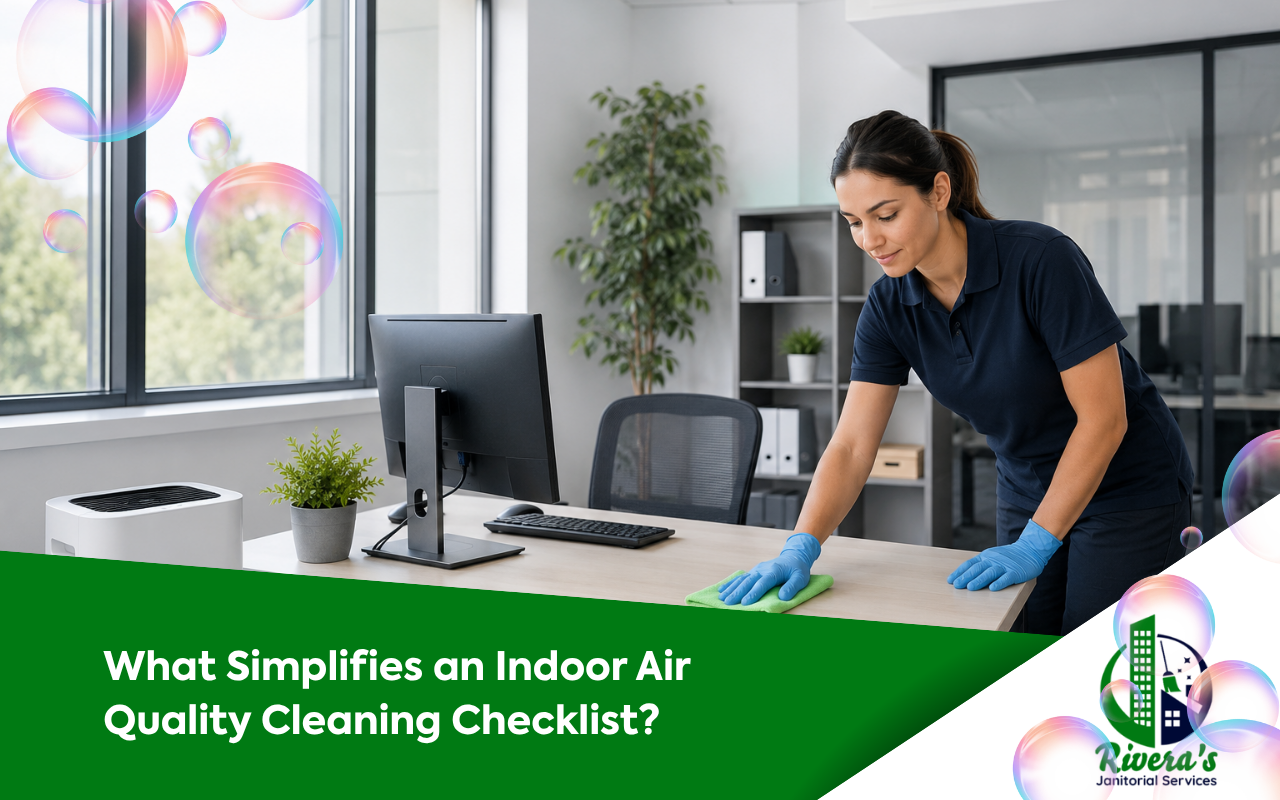
An indoor air quality cleaning checklist becomes simpler when it focuses on dust removal, vent care, filter checks, moisture control, and regular workplace cleaning. These steps help reduce particles that affect comfort, breathing, and daily focus.
A clean-air checklist is a practical plan for removing dust, allergens, odors, and moisture from indoor spaces. Offices, homes, and shared buildings use it to control buildup before particles move through vents, carpets, furniture, and busy work areas.
For teams that want clearer air and easier upkeep, office cleaning support can help keep routine tasks organized and practical.
Reduce Daily Dust With a Simple Cleaning Routine
A useful checklist starts with the areas that collect the most dust. Desks, vents, shelves, floors, and entry points need regular attention because particles settle there first.
Dust can move again when people walk, clean, open doors, or use the HVAC system. At Rivera’s Janitorial Services, we look at daily traffic, surface types, and visible buildup before recommending a routine.
The goal is steady cleaning that prevents heavy dust layers, not random deep cleaning after the air already feels stale.
Daily Dust Control Tasks
- Wipe high surfaces before lower surfaces.
- Vacuum carpet edges and walkways often.
- Clean return grilles and visible vents.
- Check damp areas for mold risk.
- Keep clutter away from airflow paths.
Use HVAC Vent Dust Cleaning to Limit Recirculated Particles
HVAC vent dust cleaning helps limit particles that return to rooms through airflow. Dust on vent covers, return grilles, and nearby walls can recirculate when the system runs.
This can become more noticeable during busy workdays or seasonal allergy periods. Our team checks visible vent dust, nearby ceiling stains, and furniture placement around airflow paths.
Then we clean reachable surfaces and explain when a deeper HVAC review may be useful. According to the EPA, ventilation and filtration are key ways to improve indoor air quality.
Key Takeaway
Dust control works best when surfaces and airflow paths are cleaned together. Vents, grilles, desks, floors, and entry points all support a cleaner indoor routine.
Compare Indoor Air Quality Cleaning Tasks by Area
A room-by-room checklist helps offices stay organized. It also makes it easier to assign routine tasks and identify areas that may need deeper cleaning.
Indoor Air Quality Cleaning Guide
| Area | Cleaning Task | Why It Helps |
|---|---|---|
| HVAC vents | Remove visible dust from vents and grilles. | Helps reduce dust that can move through airflow. |
| Desks and shelves | Wipe high-touch and dust-prone surfaces. | Limits settled particles in work areas. |
| Carpets and floors | Vacuum walkways, edges, and entry zones. | Reduces dust, pollen, and debris tracked indoors. |
| Bathrooms and kitchens | Clean surfaces and use exhaust fans when needed. | Supports moisture and odor control. |
| Entryways | Use mats and remove tracked-in debris. | Helps stop outdoor particles before they spread. |
Build Better Dust Control Workplace Habits
Dust control workplace habits work best when everyone supports the same simple routine. Entry mats, clean desks, closed storage, and regular floor care help reduce dust, pollen, and debris.
When customers contact Rivera’s Janitorial Services, we often ask about foot traffic, flooring, employee work areas, and cleaning frequency.
These details help us guide the right level of workplace cleaning support without making the plan too complicated.
Helpful Workplace Habits
- Use entry mats near main doors.
- Store paper and supplies in closed cabinets.
- Clean shared tables after heavy use.
- Vacuum fabric chairs and carpeted areas.
- Remove construction or renovation dust quickly.
If dust is linked to recent remodeling, review post-construction cleanup planning before particles spread into vents and workstations.
Key Takeaway
Workplace dust control depends on consistent habits. Entry mats, closed storage, regular vacuuming, and quick post-construction cleanup can reduce particle buildup.
Support Cleaner Offices With Commercial Cleaning Services
Commercial cleaning services in Ventura County can support cleaner indoor air by keeping dust, allergens, and surface buildup under control. A planned routine helps offices stay more comfortable during allergy season, flu season, and high-traffic business days.
With Rivera’s Janitorial Services, you get practical guidance before work begins. We review the areas that need attention, explain what cleaning steps fit the space, and help avoid unsupported promises about timing or results.
Ventura County offices can face outdoor dust, pollen, and coastal moisture changes. Because of that, cleaning should include floors, vents, shared touchpoints, and moisture-prone areas.
For seasonal concerns, use office allergy cleaning tips to support a more complete routine.
Set Clear Expectations Before Booking Service
A clear process helps customers know what happens before cleaning begins. The first step is sharing the space type, main concerns, traffic level, and any dust, odor, moisture, or allergy problems that need attention.
When customers reach out to Rivera’s Janitorial Services, we listen first and ask practical questions. Then we review the cleaning needs and explain the next step in plain language.
What to Share Before Service
- Tell us your main air quality concern.
- Share the building type and cleaning needs.
- Point out vents, carpets, or damp areas.
- Review routine tasks and deeper cleaning options.
- Ask about next steps through contact our team.
Key Takeaway
A clear cleaning plan starts with the right details. Traffic level, vent dust, flooring, moisture, and allergy concerns help shape a practical routine.
Combine Cleaning With Ventilation and Filter Checks
Ventilation and filter checks make a cleaning checklist more complete. Cleaning removes dust from surfaces, while better airflow helps dilute indoor particles and move stale air out when conditions allow.
The CDC notes that ventilation can help reduce the amount of virus particles in indoor air. Offices should combine cleaning with fresh-air habits, exhaust fans, and filter checks when possible.
Simple Decision Guide
- Clean first when dust is visible on surfaces.
- Ventilate when rooms feel stale or humid.
- Replace filters when they look dirty.
- Use exhaust fans in restrooms and kitchens.
- Review flu season disinfection steps during high-risk months.
Frequently Asked Questions
How often should offices clean vents and grilles?
Visible vents and grilles should be checked often and cleaned when dust appears. Offices with heavy traffic, open windows, or allergy concerns may need more frequent attention. A regular checklist makes small buildup easier to control before particles spread.
What causes poor indoor air quality at work?
Common causes include dust, pollen, dirty vents, moisture, strong odors, clutter, and poor airflow. Recent remodeling can also leave fine particles behind. If construction dust is a concern, review post-construction cleanup planning before routine cleaning resumes.
Can cleaning help reduce allergy symptoms indoors?
Cleaning can help reduce dust, pollen, and surface allergens that bother many people indoors. It should include floors, desks, vents, and fabric surfaces. For seasonal planning, office allergy cleaning tips can help teams prepare.
Should air purifiers replace regular office cleaning?
No. Air purifiers can help capture some airborne particles, but dust still settles on floors, desks, shelves, and vents. Cleaning removes buildup from surfaces, while filtration supports the air after particles become airborne.
Who can help create a practical office checklist?
A cleaning team can help review your space, traffic patterns, and problem areas. For support with routine tasks and cleaner work areas, explore office cleaning support and choose steps that match your workplace needs.
Build Cleaner Workdays With Consistent Air Care
A simple indoor air quality cleaning checklist helps your team stay ahead of dust, vents, moisture, and shared-space buildup. Start with the most used areas, keep tasks consistent, and ask for help when deeper cleaning is needed.
To plan your next step, contact our team and share your workplace cleaning concerns.